
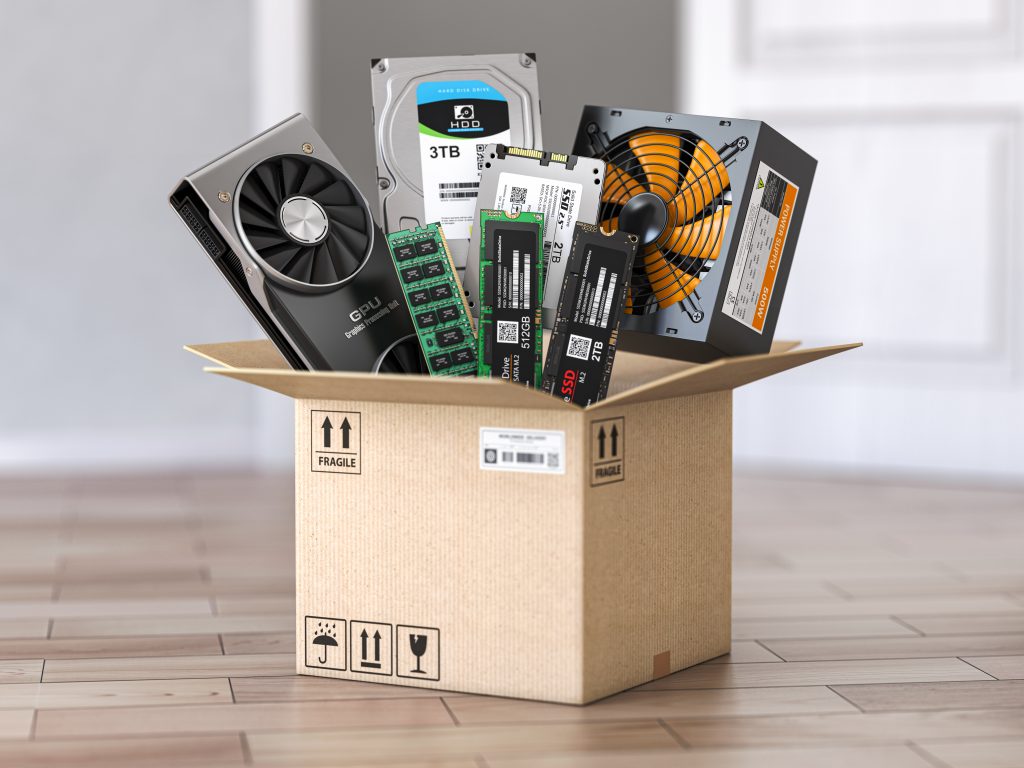
As the professional logistics team at U-Freight, we specialize in providing safe and efficient international air freight services, particularly suitable for high-value electronics such as smartphones, laptops and electronic components. Air freight is the preferred method for shipping these products due to its speed, high security, and ability to effectively reduce risks. This article will detail packaging requirements, customs clearance processes, and dangerous goods declarations (especially for products containing lithium batteries), helping you avoid common issues and ensure smooth delivery.
1. Packaging Requirements: Protecting High-Value Goods from Damage
High-value electronics are susceptible to vibration, pressure, or humidity. Proper packaging is key to successful air shipping. Follow these best practices:
- Use sturdy outer boxes: Choose double- or triple-wall corrugated cartons, with internal cushioning like bubble wrap, foam, or shock-absorbing materials to prevent movement. Triple-wall boxes are suitable for heavier items, while double-wall ones are ideal for lighter goods.
- Anti-static protection: For large or fragile components (such as large circuit boards), it is recommended to use anti-static packaging boxes, with anti-static foam or partitions to secure them and prevent collision or movement.
For small electronic products or components, anti-static bags and bubble bags can be used to protect against electrostatic damage. - Additional measures for high-value goods: Recommend double-boxing (inner box inside an outer box) and label with “Fragile” and “Handle with Care”.
- Weight and dimensions: Ensure packaging complies with IATA standards to avoid overweight or oversize fees.
U-Freight offers professional packaging services, including UN-certified boxes, to keep your goods safe throughout transit.
2. Customs Clearance Process: Document Preparation and Key Notes
Air freight clearance is fast, but incomplete documents can cause delays or fines. Common required documents include:
- Commercial Invoice: Provide detailed information including description of goods, HS code, unit price, total value, quantity, and country of origin. Customs use this document to assess duties.
- Packing List: Provide number of cartons, contents, weight, and dimensions per box.
- Air Waybill (AWB): Serves as the transport contract and tracking proof, issued by the airline or freight forwarder.
- Other supplementary documents: Depending on the requirements of the destination country, you may need to provide certificate of Origin, import/export licenses, or compliance declarations for certain electronic products (such as CE/FCC certification).
Customs Clearance Tips:
- Accurate value declaration: Avoid under-declaration suspicions.
- Purchase transport insurance: Covers losses, theft, or delays during transit.
- Understand destination country regulations: Clearance rules vary greatly by country, check whether the destination country has specific certification requirements or restrictions on communication equipment.
- Taxation example – Australia: Australian customs conduct strict tax reviews on imported goods.
· Low-value goods (below AUD 1,000): Usually exempt from import duties (excluding alcohol and tobacco). However, if purchased via e-commerce platforms and shipped to Australia, platforms typically pre-collect 10% GST at checkout.
· High-value goods (above AUD 1,000): A formal Import Declaration must be filed, and 10% GST plus possible duties (depending on the product category, typically around 5%) must be paid.
3. Dangerous Goods Declaration: Focus on Electronic Products with Lithium Batteries
Lithium batteries are governed by the IATA Dangerous Goods Regulations (UN 3480 / UN 3481 / UN 3090 / UN 3091). When it comes to general electronic devices like mobile phones, laptops, and tablets, they fall under Section II. This means you don’t need to submit a formal Shipper’s Declaration for Dangerous Goods (DGD) or use UN-certified packaging boxes.
However, there are a few important requirements to keep in mind:
A. You need to attach the Lithium Battery Mark.
B. You must provide Section II documentation as required by the airline, which typically includes:
- Shipper’s Declaration for Section II Lithium Cells / Batteries
- Material Safety Data Sheet (MSDS)
- UN 38.3 Test Report
To qualify under Section II, you have to meet all of the following conditions:
- The battery should be installed in equipment or packed together with the equipment in the same package.
- For lithium-ion batteries: a single cell must not exceed 20 Wh, and a battery pack should not exceed 100 Wh.
- For lithium metal batteries: the lithium content must be less than 1 g (per cell) or 2 g (per battery pack).
- Each package not exceeding 5 kg in net weight.
If any of these conditions aren’t met—like if the batteries are packed separately—you’ll need to follow the full IATA Dangerous Goods procedures:
- Classification and Packaging: Batteries must be classified based on watt-hour rating or lithium content, packed in UN-certified boxes, and measures should be taken to prevent short circuits, damage, and thermal runaway.
- Documentation: You’ll need to complete the Shipper’s Declaration for Dangerous Goods (DGD), detailing the UN number, proper shipping name, packing instruction, and quantity.
- Labels and Marks: Make sure to attach the lithium battery label (Class 9 Dangerous Goods label); in Section IB cases, you’ll also need to apply the “Cargo Aircraft Only” label.
Starting in 2026, all lithium-ion batteries—whether loose, packed with equipment, or installed in equipment—must be shipped at a state of charge (SoC) that doesn’t exceed 30% to minimize the risk of thermal runaway. If you don’t comply, you might face cargo rejection, delays, or even fines. Luckily, U-Freight has a team certified by IATA that specializes in air transport for dangerous goods. We are experts at handling declarations, packaging, and shipping to keep everything running smoothly.
Conclusion: Choose U-Freight for Simpler Air Shipping
Shipping high-value electronics by air involves many details, but with a professional logistics partner, it becomes straightforward. U-Freight offers one-stop services, from packaging advice and customs brokerage to dangerous goods handling, with an extensive global network ensuring safe and on-time delivery.
联络我们 for a quote or consultation
Frequently Asked Questions: Air Shipping High-Value Electronics
- Why is air freight recommended for electronics?
Air shipping is fast and secure, making it perfect for high-value items like smartphones, laptops, and components. It significantly reduces the chances of damage or theft.
- Does air shipping electronics require special packaging?
Absolutely. You should use double- or triple-wall cartons, anti-static bags, and cushioning materials. Double-boxing and labeling as “Fragile” is highly advisable. Triple-wall boxes are suitable for heavier items, while double-wall ones are ideal for lighter goods.
- Which documents are needed for customs clearance?
You’ll need a Commercial Invoice, Packing List, and Air Waybill. Some destinations may also require a Certificate of Origin or CE/FCC compliance.
- Do I need to pay tax for goods over AUD 1,000 to Australia?
Yes, you need to submit an Import Declaration and pay 10% GST along with applicable duties, which are usually around 5%.
- Do electronics with lithium batteries need a dangerous goods declaration?
If the batteries are installed in or packed with devices and meet IATA Section II limits (For lithium-ion batteries: a single cell must not exceed 20 Wh, and a battery pack should not exceed 100 Wh. For lithium metal batteries: the lithium content must be less than 1 g (per cell) or 2 g (per battery pack). Each package not exceeding 5 kg in net weight), you don’t need a formal DGD. However, you still need to attach the lithium battery mark and provide the Shipper’s Declaration for Section II Lithium Cells / Batteries, MSDS and UN 38.3 reports.
- What if the batteries are shipped separately?
They need to be packed in UN-certified boxes and follow the full IATA Dangerous Goods procedures, including submitting the Shipper’s Declaration for Dangerous Goods (DGD) form. Make sure to attach the lithium battery label (Class 9 Dangerous Goods label); in Section IB cases, you’ll also need to apply the “Cargo Aircraft Only” label.
- What are the new lithium battery rules in 2026?
Starting in 2026, all lithium-ion batteries must be shipped with a state of charge (SoC) of no more than 30% to reduce the risk of thermal runaway.
