
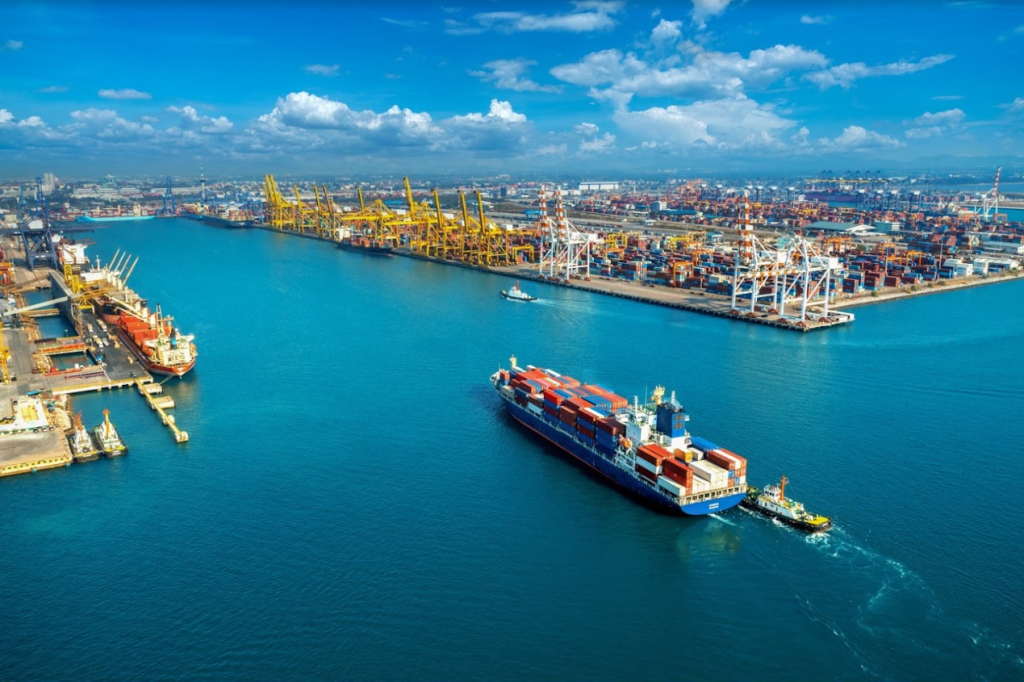
The U-Freight Group has a strong presence in the international container shipping arena and notes that ships are pouring into the fleet at a record pace, while barely a trickle escapes as scrapping is virtually non-existent, according to maritime consultancy Drewry.
It reports that last year saw yet another record for annual container shipccontracting at 4.8 million teu, narrowly surpassing previous highs of 2021 and 2024.
It adds that things haven’t slowed down much at the start of this year, with approximately another 290,000 teu ordered in January.
Deliveries of new container ships averaged 180,000 teu per month in 2025, while demolitions reached only 6,000 teu over the entire year.
In response the question why the rush to build, Drewry does have some theories.
It suggests that some owners are betting on geopolitical uncertainty causing prolonged disruption – routing changes, congestion, and labour strikes – that could tighten effective supply and justify running with a larger fleet. However, the law of diminishing returns is at play here. Despite all of the large-scale disruption witnessed in 2025, it wasn’t enough to prevent freight rates from falling sharply. Drewry’s World Container Index shed 43% of its value over the course of last year, with weekly declines in 36 of 51 reporting weeks.
Drewry also suggests that owners want to future-proof their fleets by adding more dual-fuel ships that comply with stricter environmental regulations. More fuel-efficient fleets will also give owners/operators a competitive advantage with lower bunker costs, carbon taxes and charter rate premiums.
Furthermore it adds that rising building costs and limited yard slots have created urgency, with owners fearing that they may miss the window for economically viable newbuilds.
Finally, Drewry recalls that the roots of the current capacity surge trace back to the early 2020s, when MSC set out to overtake Maersk as the world’s largest container line. That objective was achieved in 1Q22, but MSC has since widened the gap aggressively through an unprecedented combination of newbuild orders and second-hand acquisitions.
Against this backdrop, new orders placed by other Top 10 carriers must be viewed less as discretionary growth and more as defensive positioning. MSC’s ascent has triggered a quasi-arms race, one that few carriers appear willing to opt out of, even at the cost of prolonging the industry’s capacity imbalance.
Drewry cautions that it is important to remember that fleet growth is not the same thing as capacity growth. What matters is not just how many ships there are, but how efficiently they are working. Port congestion, sailing speed and voyage routing decisions can all impact what Drewry calls “effective capacity”.
Taking a look back in time, Drewry shows how for the first part of this century growth for the total fleet, effective capacity and world container traffic were largely aligned, but began to veer from one another around the global financial crisis. Since then, fleet and effective capacity have consistently run ahead of demand, apart from during the Covid years when impaired port productivity dragged down effective capacity.
Over-ordering and limited demolitions have become consistent features of the industry over the past 15 or so years. Therefore, one might question if this is a hard-wired habit that carriers will not be able to shake. Consolidation and bigger alliances were supposed to bring about more control, but there is little evidence of it to date.
While carrier behaviour is notoriously difficult to predict, Drewry says we have to assume that lines will not sit back idly and allow the market to drift against them without a fight. Its forecasts already assume that sailing speeds will continue to slow, but if greater scrapping doesn’t materialise soon, lines will have to consider reducing the speed input further.
Slow steaming has become one the industry’s favourite pressure valves and while it unquestionably provides carriers with impressive flexibility – speed can be increased or reduced quickly as market conditions change – ultimately, slow steaming only masks the underlying overcapacity, delays scrapping and transfers cost from carriers to cargo owners. Fuel savings accrue to carriers, while time-related costs (resulting from longer transit times) are transferred down the supply chain.
Shippers are the beneficiaries of the industry’s insatiable appetite for new tonnage right now, in the form of lower freight rates, but they need to be aware of the risk it holds. Carriers’ answer to this self-made problem will very likely involve operating inefficiencies that will cost them, too.
In Drewry’s opinion, spending billions on new hardware, only to then operate them significantly below design speed seems an inefficient waste. It would be better to tackle the problem at source and start removing vintage ships at scale.
U-Freight continues to monitor developments in global container shipping lanes closely. We remain committed to supporting customers with reliable, flexible transport solutions across air, sea and multimodal services, helping navigate route changes and maintain resilience in international supply chains.
For expert advice or further information on our ocean freight services, please contact your local U-Freight office or visit the ocean freight section of this website.
News
Additional container shipping capacity keeps coming
17
2 月
2 月
