
With the US$800 de minimis exemption suspended and Amazon AWD introducing new product restrictions from July 31, 2026, cross-border eCommerce sellers are rethinking how they import, store and fulfill inventory in the U.S.
The U.S. eCommerce logistics landscape is entering a new phase.
The long-standing US$800 de minimis exemption is no longer available for most low-value imports, fundamentally changing the economics of shipping individual parcels directly from overseas to U.S. consumers. At the same time, Amazon is tightening eligibility for its Amazon Warehousing & Distribution (AWD) programme, with new size and weight restrictions taking effect on July 31, 2026.
For cross-border eCommerce sellers, particularly those sourcing products from China and selling into the U.S., these changes are accelerating a shift away from a direct-to-consumer international parcel model towards bulk importing, U.S. warehousing, 3PL fulfillment and domestic distribution.
For many sellers, a U.S. warehouse is no longer simply an optional logistics asset. It is becoming an increasingly important part of a resilient U.S. market-entry strategy.
The US$800 De Minimis Model Has Changed
For years, the U.S. de minimis provision allowed qualifying shipments valued at US$800 or less to enter under a simplified duty-free framework.
This model became particularly important to cross-border eCommerce businesses because individual orders could be shipped directly from overseas to U.S. consumers without going through the same import process as conventional commercial shipments.
That model has now changed.
The U.S. government suspended the de minimis administrative exemption for merchandise valued at US$800 or less arriving through non-postal modes, and subsequent regulatory action in June 2026 made the suspension indefinite. Merchandise valued at US$800 or less arriving through these channels must now use formal or informal entry procedures.
This means that the traditional “ship one low-value parcel from China directly to the consumer” model has become considerably more complex and costly.
For eCommerce sellers, the question is no longer simply:
“How cheaply can I ship each order from China to the U.S.?”
It is increasingly:
“Where should I hold inventory, and how should I fulfil U.S. orders?”
From T86 to a New U.S. Import and Fulfillment Model
The previous de minimis environment supported a highly decentralised fulfillment model: inventory could remain in China or another origin market until an individual consumer placed an order.
With the de minimis framework no longer available in the same way, sellers need to reconsider their import, customs and inventory strategy.
Rather than moving thousands of individual parcels across the border, businesses can increasingly consider:
China factory → consolidated international freight → U.S. import → U.S. 3PL warehouse → domestic fulfillment → consumer
This approach changes the role of logistics.
International transportation, customs clearance, warehousing, inventory management, pick-and-pack, domestic delivery and returns become interconnected parts of the same supply chain.
For growing eCommerce brands, this can provide greater control over landed costs, inventory availability and delivery performance.
Why U.S. 3PL Warehousing Is Becoming More Strategic
A U.S. warehouse is not legally mandatory simply because the de minimis exemption has changed.
However, for many cross-border sellers, holding inventory inside the U.S. can become strategically attractive.
Instead of importing every customer order individually, sellers can import inventory in larger consolidated shipments and fulfil orders domestically.
This can offer several potential advantages:
- Better inventory availability: Products are already positioned close to U.S. customers.
- Faster delivery: Orders can move through domestic delivery networks rather than crossing an international border after purchase.
- Greater supply chain control: Sellers can manage inventory, fulfillment and returns through a local logistics partner.
- More predictable operations: Import and customs processes can be separated from individual consumer orders.
- Scalable fulfillment: A 3PL can support increasing order volumes without requiring the seller to build its own warehouse operation.
This shift is already visible in the market.
Chinese eCommerce platforms and logistics companies have been increasing their U.S. warehouse presence as the de minimis environment changes. Industry reporting has also highlighted the growing use of U.S. warehouse capacity by Chinese eCommerce and logistics businesses.
The strategic implication is clear:
Inventory positioning is becoming part of the competitive strategy for selling in the U.S.
Amazon AWD Changes the Fulfillment Equation
The changes are not limited to customs.
Amazon has also announced an important change to its Amazon Warehousing & Distribution (AWD) programme.
Starting July 31, 2026, AWD will only accept sortable products that are:
- Less than 18 inches × 14 inches × 8 inches
- Less than 20 lb
Products exceeding these thresholds should be sent directly to Amazon’s fulfillment network using the applicable Send to Amazon workflow.
This does not mean that Amazon AWD is ending.
Instead, the change means that sellers with larger or heavier products may need to reconsider how they store and replenish inventory.
For businesses selling products such as home goods, sporting equipment, lifestyle products, appliances, furniture-related items or other bulky SKUs, this can create an additional logistics challenge.
What Happens to Oversized eCommerce Inventory?
For a seller with large or heavy products, the logistics model may increasingly look like:
Factory / Supplier → International Freight → U.S. 3PL Warehouse → Amazon / Retailer / Consumer
rather than:
Factory → Amazon AWD → FBA → Consumer
A strategically located U.S. 3PL warehouse can act as an inventory buffer between international supply and multiple sales channels.
This can allow businesses to:
- Hold bulk inventory closer to the U.S. market
- Replenish Amazon fulfillment centres when required
- Fulfil orders from their own eCommerce website
- Support marketplace orders
- Manage B2B and wholesale distribution
- Process returns
- Carry out kitting, labelling and other value-added services
The result is a more flexible multi-channel fulfillment model.
China-to-US eCommerce Logistics Is Moving from Parcel Shipping to Inventory Positioning
The biggest change may not be the end of one customs programme or the restriction of one Amazon service.
It is the broader shift in supply chain thinking.
Previously, many cross-border sellers could operate with:
Inventory in China + direct international parcel shipping
Increasingly, the model is becoming:
Inventory in China + consolidated freight + U.S. inventory + domestic fulfillment
This creates new demand for logistics capabilities beyond transportation.
Sellers need partners that can connect:
Freight Forwarding + Customs Clearance + Warehousing + Inventory Management + Fulfillment + Domestic Distribution + Returns
This is where a 3PL becomes more than a warehouse provider.
It becomes a supply chain partner.
Why a Multi-Hub Strategy Matters
Not every SKU needs to be stored in the U.S., and not every U.S. order needs to follow the same fulfillment route.
A more sophisticated approach is to segment inventory according to:
- SKU size and weight
- Sales velocity
- Customer location
- Amazon versus DTC orders
- B2B versus B2C demand
- Seasonal demand
- Replenishment requirements
- International versus domestic fulfillment
For example, fast-moving products can be positioned in U.S. fulfillment centres, while slower-moving or new products can remain closer to the manufacturing base until demand becomes established.
This creates a flexible, multi-node supply chain rather than a single fulfillment model.
How U-Freight Helps eCommerce Businesses Adapt
U-Freight provides integrated international freight forwarding, warehousing and eCommerce fulfillment solutions designed to connect different stages of the supply chain.
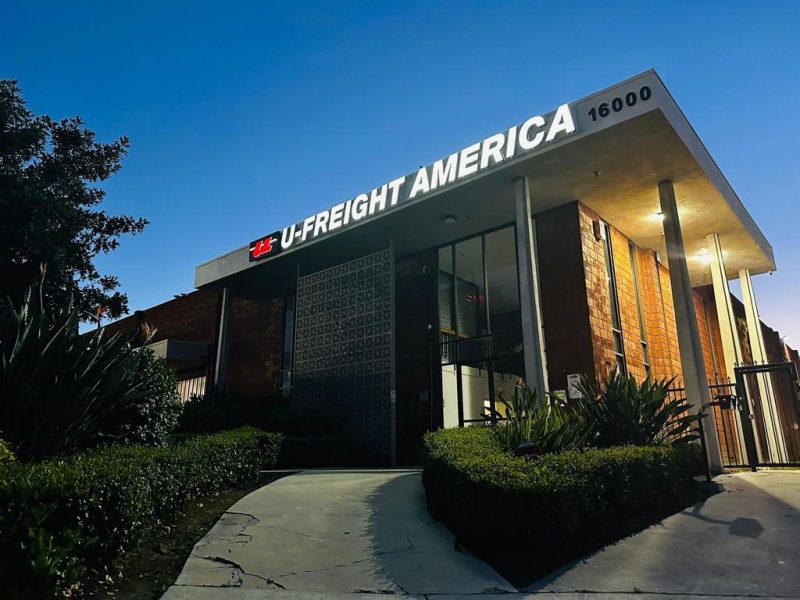
Its eCommerce fulfillment network includes facilities in Los Angeles and Chicago, alongside fulfillment centres across Asia, Europe and other major markets.
U-Freight’s solutions can cover the process from international transportation and customs clearance through to inventory storage, order fulfillment, pick-and-pack, value-added services and returns.
For Amazon sellers, U-Freight has also provided FBA-related logistics services since 2016, including international transportation, customs clearance and delivery to Amazon fulfillment centres.
This creates an opportunity for sellers to build a more flexible model:
China / Asia Supply → Ocean or Air Freight → U.S. Customs → U.S. 3PL Warehouse → Amazon / DTC / B2B → Returns
Instead of relying on one fulfillment channel, businesses can use their U.S. inventory as a strategic distribution point.
The New Question for Cross-Border Sellers
The U.S. eCommerce market remains highly attractive.
But the logistics model that worked when low-value direct shipping benefited from de minimis is changing.
The next generation of successful cross-border eCommerce businesses will increasingly need to think about:
Where is my inventory?
How do I import it efficiently?
Which SKUs should be stored in the U.S.?
How do I serve Amazon and DTC customers from the same inventory pool?
How can I manage returns locally?
How can I scale without building my own warehouse?
These are no longer simply logistics questions.
They are growth strategy questions.
Build a More Resilient U.S. eCommerce Supply Chain
The end of the traditional de minimis model and the new AWD product restrictions are accelerating a broader transformation in cross-border eCommerce logistics.
For sellers expanding from China and other Asian markets into the U.S., U.S. warehousing and 3PL fulfillment can provide the infrastructure needed to move from direct parcel shipping to a more scalable, inventory-led supply chain.
U-Freight combines international freight forwarding, customs, warehousing and eCommerce fulfillment capabilities to help businesses build flexible logistics solutions for the U.S. market.
The future of cross-border eCommerce is not simply about moving products faster. It is about positioning inventory smarter.
Key Takeaways
- The US$800 de minimis model has fundamentally changed. Cross-border eCommerce sellers can no longer rely on the previous duty-free treatment for qualifying low-value shipments arriving through non-postal modes.
- T86 is no longer a reliable model for traditional low-value eCommerce imports. Sellers need to reassess their U.S. import, customs and fulfillment strategy.
- U.S. warehousing is becoming strategically more important. While a U.S. warehouse is not legally mandatory, holding inventory in the U.S. can help sellers reduce reliance on individual international parcel shipments and improve fulfillment flexibility.
- Amazon AWD is becoming more restrictive for larger products. From July 31, 2026, AWD will only accept sortable products below its specified size and weight thresholds.
- 3PL warehousing provides an alternative fulfillment layer. U.S. 3PL facilities can support Amazon replenishment, DTC fulfillment, B2B distribution, returns and value-added services.
- China-to-US eCommerce logistics is shifting from parcel shipping to inventory positioning. Instead of shipping every order internationally after purchase, sellers can import inventory in bulk and fulfill orders domestically.
- A multi-channel fulfillment strategy can improve flexibility. A U.S. inventory hub can serve Amazon, DTC websites, marketplaces and B2B customers from the same supply chain.
- The right logistics partner can become a growth enabler. International freight forwarding, customs clearance, warehousing and fulfillment need to work together as one integrated supply chain.
Frequently Asked Questions
Is the US$800 de minimis exemption still available?
The U.S. de minimis exemption has been suspended for merchandise valued at US$800 or less arriving through non-postal modes, ending the previous duty-free model that many cross-border eCommerce sellers relied on. The suspension was made indefinite through regulatory action in June 2026.
Sellers should therefore review their import, customs and fulfillment processes rather than assuming that low-value shipments can continue under the previous de minimis model.
What happened to T86 entry for low-value shipments?
T86 was an entry type associated with the previous de minimis framework for qualifying low-value imports. With the de minimis exemption suspended, sellers can no longer rely on T86 as the traditional low-value, duty-free import solution.
Businesses should work with their customs broker or logistics provider to determine the appropriate entry process for their products and shipment model.
Do eCommerce sellers now have to use a US warehouse?
Not necessarily. The end of de minimis does not create a legal requirement for every eCommerce seller to operate or use a U.S. warehouse.
However, for businesses with significant U.S. sales volumes, importing inventory in bulk and fulfilling orders domestically through a U.S. 3PL can become a more attractive and scalable logistics strategy.
Why is US 3PL warehousing becoming more important for cross-border eCommerce?
A U.S. 3PL can allow sellers to import inventory in larger shipments, store products closer to customers and fulfill orders domestically.
Depending on the provider and business model, services can include inventory management, pick and pack, domestic fulfillment, Amazon replenishment, B2B distribution, returns and value-added services.
What is changing with Amazon AWD from July 31, 2026?
From July 31, 2026, Amazon Warehousing & Distribution (AWD) will only accept sortable products that meet Amazon’s specified size and weight requirements: less than 18 × 14 × 8 inches and less than 20 lb.
Products outside these parameters may need to be sent directly to Amazon’s fulfillment network through the applicable Send to Amazon process.
How can U-Freight help with US eCommerce fulfillment?
U-Freight can connect international freight forwarding, customs clearance, warehousing and eCommerce fulfillment within an integrated logistics solution.
With U.S. fulfillment locations including Los Angeles and Chicago, U-Freight can support inventory storage, order fulfillment, pick and pack, value-added services and other logistics requirements for businesses selling into the U.S. market.
This allows eCommerce businesses to build a more flexible supply chain connecting Asia sourcing → international freight → U.S. import → U.S. warehousing → Amazon, DTC and B2B fulfillment.
Plan Your US eCommerce Supply Chain
De minimis has changed. Amazon AWD has changed.
Is your fulfillment strategy ready?
Talk to U-Freight about your US warehousing and fulfillment strategy.
