
As global supply chains continue to face disruption from geopolitical tensions, rerouted maritime corridors, and volatile fuel surcharges, international shippers are increasingly trapped between two extremes:
- Ocean freight is too slow
- Air freight is too expensive
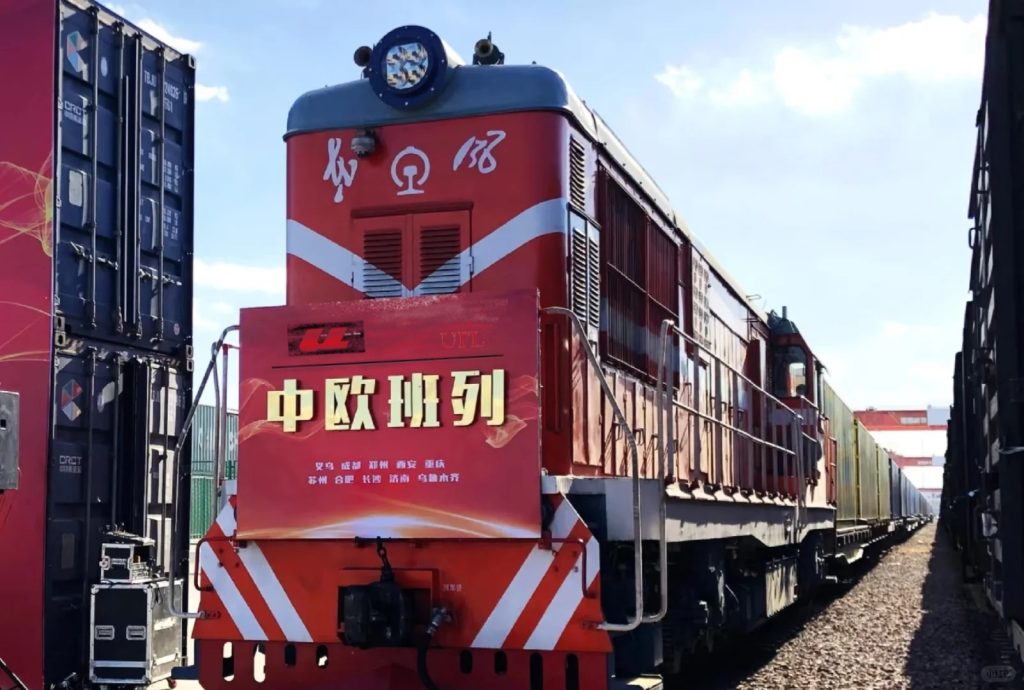
In this environment, China-Europe Rail Freight has emerged as the strategic “third way”—offering a balanced solution between cost, speed, and reliability.
At U-Freight, we are seeing a significant surge in demand for rail freight solutions connecting China and Europe.
Why Are Ocean and Air Freight Costs Rising Again?
Global freight volatility is driven by several structural factors:
- Maritime rerouting due to geopolitical conflicts
- Increased fuel surcharges across air and sea networks
- Port congestion in major global hubs
- Limited air cargo capacity during peak cycles
- Supply chain fragmentation across regions
These factors have made traditional logistics models less predictable and more expensive.
The Strategic China–Europe Rail Freight Network
The China–Europe Railway Express connects major industrial hubs in China with key logistics centers in Europe via the Eurasian rail corridor.
Key Departure Hubs (China)
- Zhengzhou
- Changsha
- Chengdu
- Hefei
- Chongqing
- Xi’an
- Wuhan
Key Border Gateways
- Alashankou
- Horgos
European Entry Points
- Brest
- Małaszewicze
Core European Distribution Hubs (U-Freight Network)
- Hamburg (Germany)
- Munich (Germany)
- Duisburg (Germany)
- Liège (Belgium)
- Warsaw (Poland)
From these hubs, cargo is distributed across Europe via road and intermodal networks.
What Makes China-Europe Rail Freight a Strong Alternative?
Rail freight is rapidly becoming a preferred solution because it balances the weaknesses of both ocean and air freight.
Key Advantages
- Faster than ocean freight
- Cheaper than air freight
- Stable transit schedules
- Lower carbon emissions
- Reduced exposure to maritime disruptions
When Should Businesses Choose Rail Freight Instead of Ocean or Air Freight?
Rail freight is most effective when businesses need a balance between cost and speed.
Decision Framework
| Factor | Rail Freight | Ocean Freight | Air Freight |
|---|---|---|---|
| Transit Time | 15–20 days | 30–60+ days | 3–7 days |
| Cost Level | Medium | Lowest | Highest |
| Reliability | High | Medium | High |
| Carbon Emissions | Low | Medium | Very High |
| Fuel Surcharges | Stable | Variable | Highly volatile |
| Best Use Case | Balanced supply chain | Bulk cargo | Urgent shipments |
| Supply Chain Role | Optimizer | Cost saver | Speed solution |
Is China-Europe Rail Freight Faster Than Ocean Freight?
Yes.
China-Europe rail freight typically takes 15–20 days, which is significantly faster than rerouted ocean freight routes that may exceed 35–60 days.
This makes rail freight an ideal solution for inventory replenishment and mid-speed supply chains.
Is Rail Freight Cheaper Than Air Freight?
Yes.
Rail freight is generally around 20% of air freight cost, depending on:
- Route
- Cargo type
- Seasonality
- Weight and volume
- Origin station surcharge structure
It offers a strong cost-performance balance for non-urgent cargo.
Which Products Are Best Suited for China-Europe Rail Freight?
Rail freight is ideal for:
- Fashion and apparel
- Consumer electronics
- Automotive parts
- Industrial machinery
- Medical equipment
- eCommerce inventory
- Retail replenishment goods
How Reliable Is China-Europe Rail Freight?
Rail freight is generally considered highly reliable because:
- It is not affected by maritime weather disruptions
- It avoids ocean route congestion
- It is less exposed to geopolitical sea-route risks
- It operates on structured schedules
This makes it a strong contingency solution during global disruptions.
Why Are More Shippers Switching to Rail Freight?
Shippers are shifting to rail due to:
- Rising ocean freight volatility
- Air freight cost inflation
- Supply chain uncertainty
- ESG and carbon reduction goals
- Need for faster replenishment cycles
When Should Businesses Consider Rail Freight?
Rail freight should be considered when:
- Ocean freight is too slow
- Air freight is too expensive
- Inventory turnover speed is critical
- Supply chain resilience is required
- ESG targets are a priority
U-Freight Operational Advantage in Rail Freight Logistics
U-Freight manages the entire rail freight lifecycle with end-to-end visibility and operational control.
Key Service Components
- Proactive space booking (recommended 2 weeks in advance)
- Full customs documentation handling
- Rail Waybill (FBL) coordination
- Pre-arrival clearance preparation
- European last-mile delivery within 2 working days
- Full tracking and Proof of Delivery (POD)
- Container return management
Rail Freight Loading Guidelines (FCL & LCL)
Full Container Load (FCL)
- Standard capacity: ~68 CBM (40’HC)
- Weight limit: ~21 tons (up to 25 tons on selected routes)
- Even weight distribution required
Less than Container Load (LCL)
- Standard package limits: under 2m length, under 3 tons
- Oversized cargo may incur handling fees
- Non-stackable cargo charged at minimum volume height rules
Why Choose U-Freight for China-Europe Rail Freight?
U-Freight provides:
- Established China–Europe rail network
- End-to-end customs handling
- European distribution hubs
- Real-time shipment visibility
- Integrated air–sea–rail solutions
- Strong ESG-aligned logistics support
In a volatile global logistics environment, China-Europe Rail Freight is no longer an alternative—it is becoming a strategic pillar of modern supply chain design.
Need support with China-Europe rail freight? Contact us to discuss cost-effective rail, air, and sea freight options for your supply chain.
Frequently Asked Questions
It is a transcontinental rail logistics service connecting China and Europe through the Eurasian rail network, offering a mid-speed and cost-efficient alternative to air and ocean freight.
Yes, significantly cheaper while offering moderate transit times.
Highly reliable due to structured rail schedules and reduced weather impact.
Yes. It remains a stable alternative due to diversified routing and reduced reliance on maritime corridors.
Commercial invoice, packing list, customs declaration, and rail waybill.
Yes, it produces significantly lower carbon emissions than air freight.
Typically 15–20 days depending on origin, customs clearance, and final destination.
Major cities include Zhengzhou, Chengdu, Xi’an, Hamburg, Duisburg, and Warsaw.
Faster than ocean freight, cheaper than air freight, lower carbon emissions and stable transit schedule
Electronics, fashion, automotive parts, machinery, and eCommerce goods.
