Batteries and powered products
Devices containing batteries, standalone cells, battery packs or products with an external power source.
Share battery configuration and product information.

Special goods should not be reviewed only after they arrive at the warehouse. Product classification, battery specification, documentation, packaging, destination and carrier arrangement can all affect acceptance, routing and handling requirements. UFL recommends submitting your product details before booking or warehouse inbound so our team can complete a case-by-case pre-check.
Products containing batteries, liquids, magnetic materials or cosmetics may be affected by airline, destination, packaging, documentation and classification requirements. The purpose of a pre-check is to identify the information and handling arrangements needed before warehouse inbound, screening or handover, helping to reduce avoidable delays caused by incomplete documentation, unsuitable packaging or insufficient product information.
UFL’s existing electronics shipping guide explains that high-value electronics require attention to protection, anti-static measures, dimensions and weight. Where lithium batteries are involved, the battery configuration and applicable requirements may also determine the labels and documentation needed.
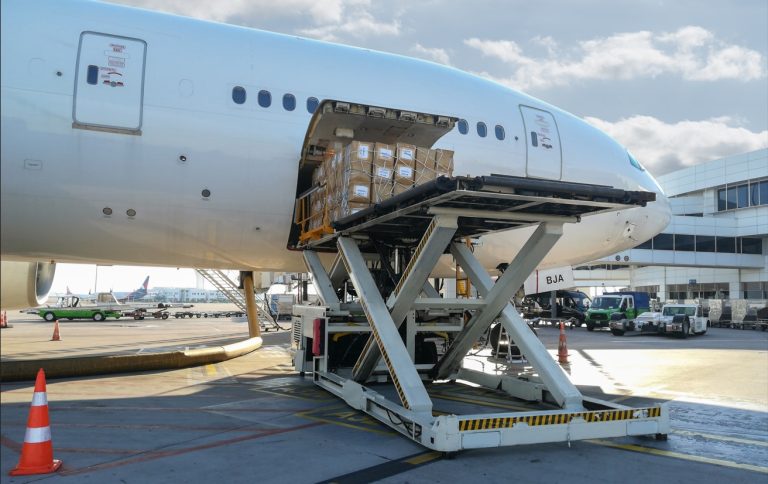
If a product’s composition, power source, contents or packaging is not straightforward, share the details before booking or warehouse inbound. The examples below indicate common situations that benefit from a case-by-case review.
Devices containing batteries, standalone cells, battery packs or products with an external power source.
Share battery configuration and product information.Liquids, gels, cosmetics, fragrances, aerosols or products with ingredients that require review.
Share product use, contents and packing details.Products containing magnetic materials, electronic components or sensitive hardware.
Share product and unit/carton packing information.Products containing powders, adhesives, cleaning materials, chemicals or formulated ingredients.
Share supporting safety information where available.Fragile or high-value goods, unusual shapes, special protection or specific labelling requirements.
Share product photos and the proposed packing configuration.A battery-powered product description alone may not show how a proposed shipment should be prepared. Before booking or warehouse inbound, confirm the battery configuration, product details, packing information and supporting records available for the actual goods.
Whether a battery is contained in equipment, packed with equipment or supplied separately can affect the information and preparation reviewed for the proposed shipment.
Share the product information first. UFL can then advise if additional details are required for the case.
State whether the battery is contained in equipment, packed with equipment or supplied separately, and confirm the number of batteries or cells per unit where available.
Share the product name, intended use, product photos or URL, battery type and relevant specification information available from the manufacturer.
Depending on the actual goods, supporting records may include battery information, UN38.3 reports, SDS/MSDS or other documentation available for review.
Provide unit, inner-pack and outer-carton details, including how the product is protected and secured for the proposed shipment.
Clear, consistent information allows the proposed shipment arrangement to be reviewed more efficiently. Share what is available; UFL can advise if additional information is needed for the case.
There is no need to build a long submission. Start with the product, its packing and the proposed destination, then add the supporting information available for the shipment.
Use a clear description rather than a broad category such as “accessories” or “sample”.
Images help show the product, its power source and how it is packed.
These help frame the proposed route and handling arrangement.
Provide outer-carton, internal-protection and unit-packing information where available.
For example, battery information, SDS/MSDS, UN38.3 reports or commercial documents where applicable.
Well-prepared packaging and documents give warehouse, transport and customer-service teams the same starting point. The final requirements are confirmed against the actual goods and proposed shipment arrangement.
Start with suitable outer cartons and internal protection for the actual goods. Before goods are sent to the warehouse, confirm that the product is secure and the packing information reflects what will be shipped.
Clear product descriptions and matching commercial records help avoid unnecessary follow-up during the proposed shipment process.
Packaging, documentation and any supporting records are reviewed according to the actual cargo, destination and proposed carrier arrangement.
UFL works from the information you provide to help organise the proposed shipment process. The exact arrangement is confirmed case by case before goods are booked or received.
We consider the product description, packing details, destination and available supporting records for the proposed shipment.
If the available information needs clarification, the team can indicate what should be checked before the proposed arrangement proceeds.
The proposed route and handling plan are assessed against the cargo characteristics, destination and carrier conditions.
Once the required information is available, UFL confirms the applicable next steps for the proposed shipment arrangement.

Submit Special Goods for Pre-Check
Send us a brief product description and your planned route. If further product, packaging or document information is needed, our air cargo team will let you know.
A pre-check does not guarantee cargo acceptance, a booking confirmation or a particular transit time. Acceptance, routing, documentation, packaging, charges and handling are determined case by case according to the actual goods, destination, carrier conditions and applicable requirements.
Not necessarily. Acceptance depends on the battery configuration, specification, documentation, packaging, destination and carrier arrangement. Submit product details for a pre-check before booking.
Not always. Requirements differ by product type, battery configuration, destination and carrier policy. In addition to an MSDS, the team may require product information, test reports, packaging details or other evidence.
A pre-check is recommended first. If documentation or packaging issues are identified only after inbound, additional handling, repacking or a change in transport arrangement may be required.
Feasibility must be confirmed based on ingredients, volume, packaging, destination and carrier arrangement. Provide ingredient information, SDS/MSDS where applicable, and the destination for an initial review.
UFL can provide operational guidance based on the packaging information submitted. The availability of actual packing services and materials must be confirmed by the Hong Kong operations team for the specific goods.
Related Topics


最新企业消息
Blog
EXW (Ex Works) is one of the 11 Incoterms® 2020 rules. Under EXW Incoterms, the...
Blog
Whether bonded warehousing is “better” than non-bonded depends entirely on what happens to the goods...
News
Global container shipping reliability has deteriorated sharply, creating fresh challenges for businesses dependent on international...
Blog
Bicycle brands, wheelset makers and outdoor equipment companies ask us similar questions for a reason...
Blog
We handle Hong Kong-origin shipments for pharmaceuticals that need temperature control, and for medical devices...
Blog
We support APAC distribution from both Hong Kong and Taiwan hubs, and the right choice...
Blog
Hong Kong to Manila air freight: the essentials Hong Kong to Manila air freight can...
Blog
The best 3PL for a consumer hardware brand shipping from Asia to the US and...