Supply-chain security standards
Helps support a more systematic approach to cargo handling and security.


Prepare shipment documentation and understand how U-Freight’s HKAEO accreditation supports secure, efficient cross-border cargo handling from Hong Kong.
Hong Kong Authorized Economic Operator (HKAEO) is an accreditation programme administered by Hong Kong Customs. U-Freight Ltd’s HKAEO accreditation confirms that the company meets stringent supply-chain security standards in its operations and cargo-handling processes. The accreditation enables access to trade-facilitation measures and supports efficient, secure and reliable logistics services.
As explained in UFL’s HKAEO announcement, the accreditation can support streamlined customs procedures and help reduce handling time and potential delays. Shipments must nevertheless comply with applicable requirements and remain subject to the risk assessment and requirements of the relevant authorities.

HKAEO supports UFL’s wider approach to secure, well-prepared and coordinated cross-border cargo handling. The following areas describe how this can support shipment preparation and operations.
Helps support a more systematic approach to cargo handling and security.
Can support smoother customs processes and cargo flows.
Earlier checking of product, value, origin and consignee information helps reduce avoidable documentation issues.
Helps warehouse, transport and customer-service teams work from the same shipment information.
HKAEO does not mean a shipment will never be inspected. It does not guarantee that every product can clear customs, be exempt from taxes, clear within a stated time or be imported into every destination. Customs processes remain dependent on the cargo, completeness of documentation, declaration data, destination rules and requirements of the relevant authorities.
HKAEO is part of UFL’s wider approach to secure and well-prepared cross-border shipments. The information required will depend on the service, cargo and destination. Explore the service that best matches your shipment flow.
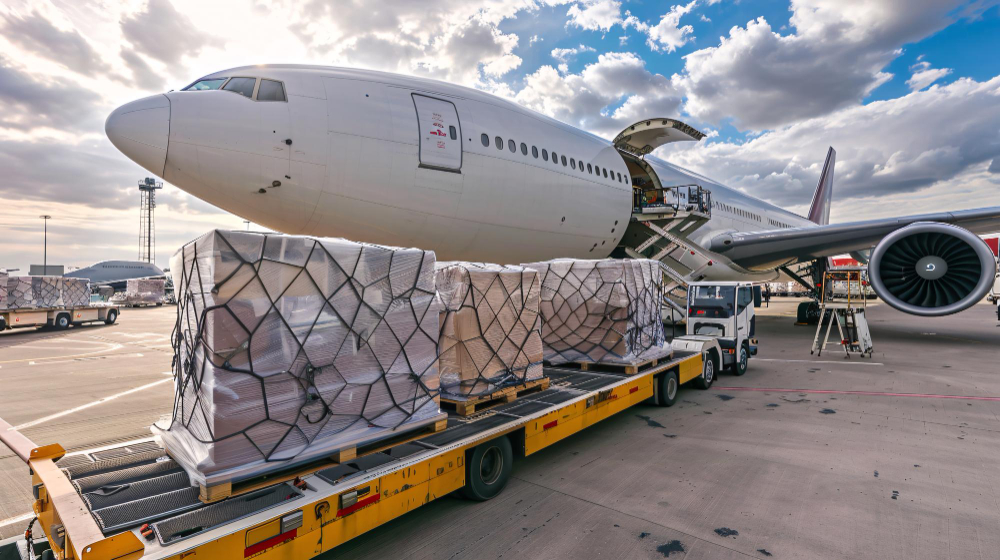
For international air cargo, complete product, route and document information helps confirm shipment requirements before booking. Where goods have special characteristics, additional pre-checks may be needed before warehouse inbound or carrier acceptance.
Explore Air ForwardingFor eCommerce fulfilment, aligned product, value, origin, importer and order information helps support consistent warehouse handling, cross-border shipment preparation and downstream delivery coordination.
Explore eCommerce FulfilmentPrepare the following information before arranging an international shipment. Clear and consistent documentation helps support smoother warehouse handling, transport planning and destination customs communication.
| Document / information | Why it matters |
|---|---|
|
01
Commercial invoice
|
Clearly state product description, quantity, unit price, total value, currency, origin and transaction information. |
|
02
Packing list
|
State carton contents, carton count, weight and dimensions so that warehouse, transport and customs data are consistent. |
|
03
Accurate product description
|
Avoid descriptions that are too generic, such as “gift”, “sample” or “accessories”. |
|
04
HS code where available
|
Supports destination customs communication and product classification. Final classification is subject to the actual product and requirements of the relevant authorities. |
|
05
Origin and product-compliance information
|
Some destinations or products may require origin, test, labelling or import-permit information. |
|
06
Importer / consignee details
|
Clarify who is responsible for import, taxes, receipt and delivery arrangements at destination. |
From pre-shipment preparation to post-dispatch follow-up, our workflow helps keep shipment information, handling arrangements and documentation aligned at every stage.
Before warehouse inbound or booking, provide product details, destination, commercial documentation and an estimated shipping date. The UFL team will review the shipment arrangement according to the required service.
Once goods arrive at the UFL Hong Kong fulfilment centre, the team handles them according to the confirmed inbound and operating workflow. Any labelling, repacking, kitting or other value-added requirement should be agreed in advance.
Before dispatch, confirm that cargo information and documentation are consistent. Any discrepancy or missing information can affect subsequent handling time.
After dispatch, shipment tracking may be available according to the service used. If documentation, customs or delivery exceptions arise, the team will follow the agreed contact and handling process.

Why is accurate documentation especially important for eCommerce?
eCommerce shipments often involve many SKUs, high order volumes, dispersed destinations, platform labels, product-compliance requirements, different importers and multiple last-mile providers. Clear and consistent product and shipment information gives warehouses, carriers and customs-related parties a common basis for handling the cargo, reducing repetitive checks and avoidable exceptions.
No. HKAEO reflects supply-chain security standards and supports trade-facilitation measures. Inspection and clearance decisions remain with the relevant authorities, based on the actual cargo and risk assessment.
Shipment efficiency depends on documents, product information, cargo operations, carrier arrangements, destination rules and authority requirements. HKAEO can support smoother processes, but it is not a fixed transit-time guarantee.
Common issues include descriptions that are too generic, quantities or values that do not match the actual cargo, missing origin information, and unclear transaction or consignee details.
UFL can help you understand the logistics workflow and shipping information required. Tax, duty, product-classification and legal responsibilities should be confirmed with qualified tax, legal or destination-market professionals.

Related Topics


最新企业消息
Blog
EXW (Ex Works) is one of the 11 Incoterms® 2020 rules. Under EXW Incoterms, the...
Blog
Whether bonded warehousing is “better” than non-bonded depends entirely on what happens to the goods...
News
Global container shipping reliability has deteriorated sharply, creating fresh challenges for businesses dependent on international...
Blog
Bicycle brands, wheelset makers and outdoor equipment companies ask us similar questions for a reason...
Blog
We handle Hong Kong-origin shipments for pharmaceuticals that need temperature control, and for medical devices...
Blog
We support APAC distribution from both Hong Kong and Taiwan hubs, and the right choice...
Blog
Hong Kong to Manila air freight: the essentials Hong Kong to Manila air freight can...
Blog
The best 3PL for a consumer hardware brand shipping from Asia to the US and...